Welcome to Ampinvt !
 Products
 Partnership
  Contact
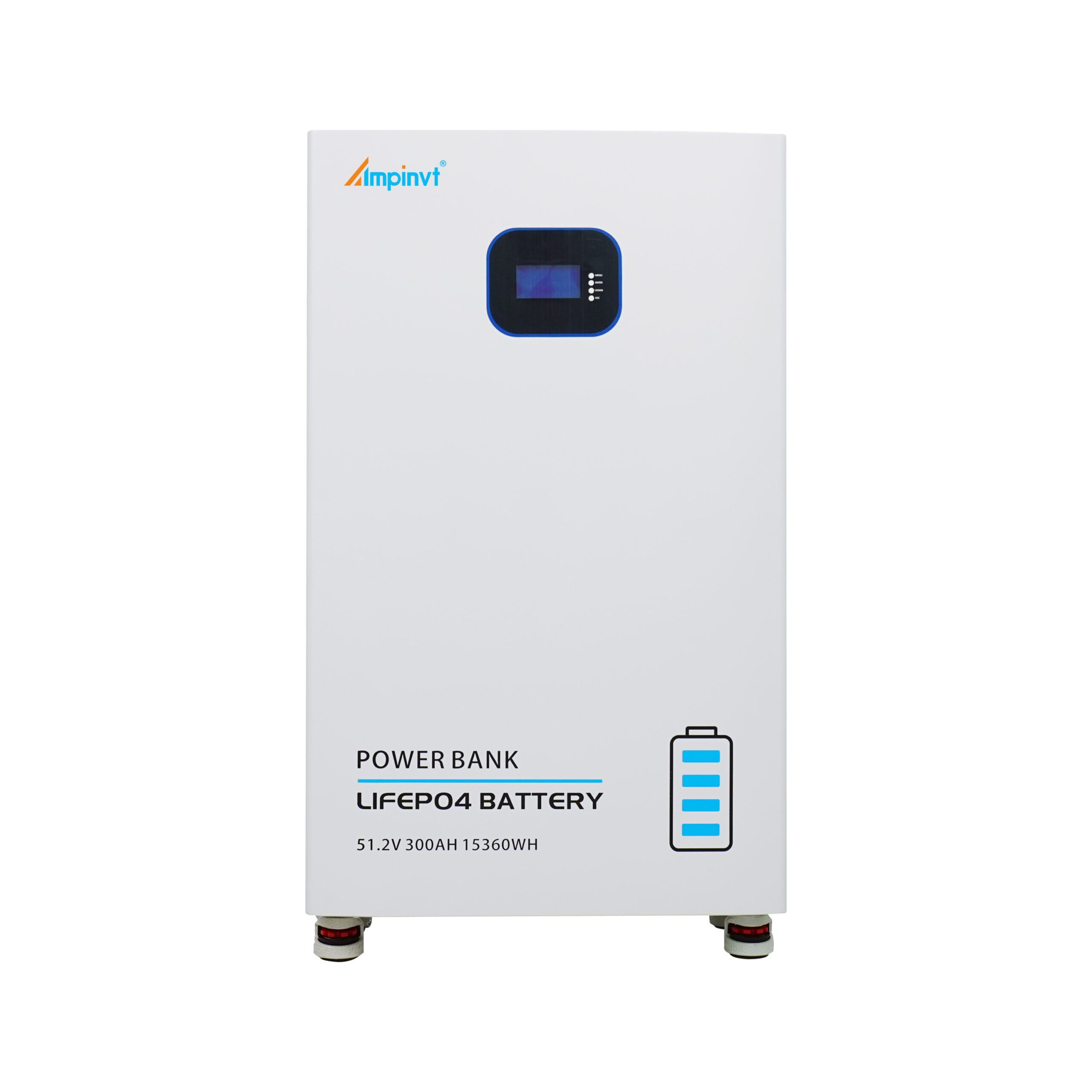
Lithium-ion batteries have emerged as a promising energy storage solution for renewable energy systems due to their high energy density, long cycle life, and ability to provide reliable and efficient power backup. Among the various types of lithium-ion batteries, LiFePO4 (lithium iron phosphate) stands out for its exceptional safety, stability, and cost-effectiveness, making it an ideal choice for renewable energy applications. This article will delve into the multifaceted role of LiFePO4 lithium batteries in renewable energy systems, highlighting their advantages and exploring their potential to transform the clean energy landscape.
Safety and Stability
Safety is a primary concern in renewable energy systems, where improper battery handling or malfunctions can pose significant risks. LiFePO4 lithium batteries are inherently safe due to their chemical composition. Unlike other lithium-ion batteries that utilize flammable liquid electrolytes, LiFePO4 batteries employ a non-flammable, thermally stable phosphate electrolyte. This eliminates the risk of thermal runaway, cell rupture, or fire, even under extreme conditions.
High Energy Density and Power Output
LiFePO4 batteries pack a high energy density, offering considerable storage capacity in compact dimensions. Their average nominal voltage of 3.2V per cell enables the creation of high-voltage battery packs without the need for complex series connections. Additionally, LiFePO4 batteries possess excellent power output capabilities, allowing for rapid charging and discharging, making them suitable for applications with fluctuating power demands and frequent load changes.
Long Cycle Life and Durability
Cycle life is a key factor for batteries in renewable energy systems, where they are subjected to repeated charging and discharging cycles. LiFePO4 batteries exhibit exceptional cycle life, with most claiming over 2,000 cycles at 100% depth of discharge (DOD). Their stable crystal structure and low internal resistance contribute to their extended lifespan, providing reliable energy storage over an extended period.
Low Self-Discharge and Energy Efficiency
LiFePO4 lithium batteries have a remarkably low self-discharge rate compared to other lithium-ion technologies. This minimal loss of charge over time ensures extended battery life and reduces maintenance costs. Additionally, LiFePO4 batteries offer high round-trip energy efficiency, minimizing energy losses during charging and discharging, leading to optimal system performance and reduced operating expenses.
Cost-Effectiveness and Scalability
LiFePO4 lithium batteries are cost-effective compared to other lithium-ion battery types, making them an economically viable option for large-scale renewable energy systems. Their high energy density reduces the number of batteries required for a given storage capacity, further reducing project costs. Moreover, LiFePO4 batteries are easily scalable, allowing for modular system expansion as renewable energy generation capacity grows.
LiFePO4 lithium batteries play a pivotal role in the proliferation of renewable energy systems. Their inherent safety, high energy density, long cycle life, low self-discharge, energy efficiency, cost-effectiveness, and scalability make them an ideal choice for a diverse range of renewable energy applications. As the demand for clean energy sources continues to rise, LiFePO4 batteries are expected to become increasingly embedded in the fabric of renewable energy systems, enabling reliable, efficient, and economical energy storage solutions.

COMPANY
PRODUCTS