Welcome to Ampinvt !
 Products
 Partnership
  Contact
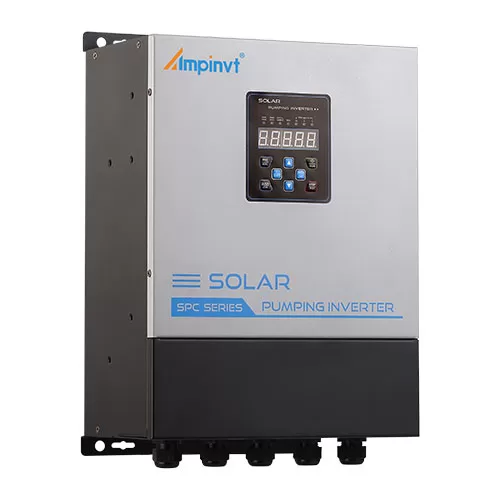
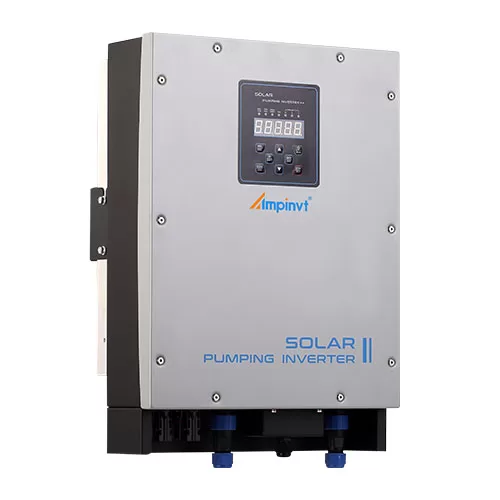
“The Ultimate Guide to 3-Phase Solar Pump Inverters” is a comprehensive resource for understanding and selecting the most suitable 3-phase solar pump inverters for various applications. This guide provides in-depth knowledge on the working principles, key features, benefits, and considerations when choosing 3-phase solar pump inverters.
Working Principles of 3-Phase Solar Pump Inverters
3-phase solar pump inverters convert direct current (DC) electricity generated by solar panels into alternating current (AC) electricity suitable for powering three-phase submersible pumps. The inverter controls the frequency and voltage of the AC output to match the specific requirements of the pump. The advanced Maximum Power Point Tracking (MPPT) algorithm maximizes power generation from solar panels, ensuring efficient operation.
Key Features of 3-Phase Solar Pump Inverters
– Waterproof and IP-rated enclosures: Protect the inverter from moisture and harsh environmental conditions.
– Wide input voltage range: Accommodate voltage fluctuations from solar panels under varying irradiation levels.
– Dry-run protection: Prevents damage to the pump by automatically shutting off power when water is not available.
– Overload protection: Guards against excessive current draw, ensuring safe operation.
– MPPT technology: Optimizes solar panel performance for maximum energy yield.
Benefits of 3-Phase Solar Pump Inverters
– Energy savings: Solar-powered pumps eliminate electricity costs associated with grid or diesel operation.
– Increased water availability: Enable access to water in remote areas where grid infrastructure is unavailable.
– Environmental sustainability: Reduce carbon emissions by using renewable energy sources.
– Low maintenance: Require minimal servicing compared to diesel or grid-connected pumps.
– Long lifespan: Typically operate for over 10 years, minimizing replacement costs.
Considerations When Choosing 3-Phase Solar Pump Inverters
– Pump power requirements: Match the inverter output power to the horsepower or kilowatts of the pump.
– Solar array capacity: Ensure the inverter can handle the maximum power output of the connected solar panels.
– Input voltage range: Verify that the inverter’s input voltage range aligns with the expected voltage from the solar panels.
– Environmental conditions: Select an inverter with an appropriate IP rating for the intended installation location.
– Features and certifications: Consider additional features such as MPPT, dry-run protection, and certifications for safety and reliability.

COMPANY
PRODUCTS